


Doctoral studies
Nerijus Rimkus22nd June 2026 „Neither“ Creative part supervisor: Prof. Audrius Klimas
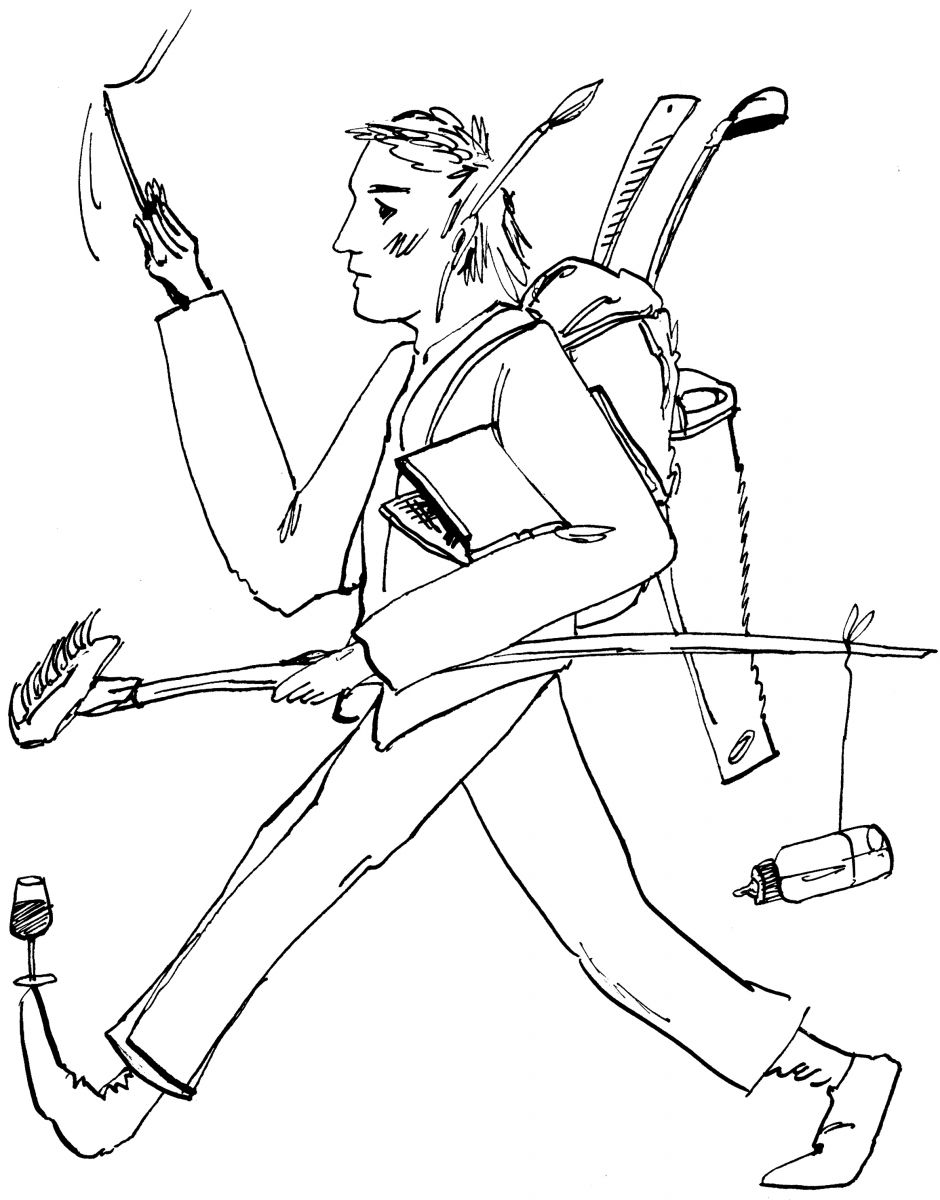
Illustration: Nerijus Rimkus (Neither). Drawn by Šarūnė Nečiūnaitė, 2026 Neither looks into the nature of graphic design, the complex identity of the designer, and the common misunderstandings that surround the profession. Rather than viewing graphic design as a mere commercial service or marketing tool, this research invites the reader to see it as an open territory for inquiry and a specific way of thinking—an attitude (attitude) that shows up both in theoretical arguments and through parallel design projects. Guided by a methodology speaking nearby, the work intentionally avoids laying down rigid professional definitions or creating strict rules. Instead, the research looks at the discipline through the lens of Marcel Duchamp’s "infra-thin"—the practice of noticing and handling those tiny, almost invisible shifts in form, material limitations, and context. By exploring the historical path of Western modernism alongside the interrupted and fragmented history of Lithuanian design, the text breaks down how everyday language, physical printing conditions, and institutional relationships shape our visual culture. By rejecting the standard, formulaic approach to "problem-solving," the investigation focuses instead on "problem-situating"—bringing underlying tensions, structural limits, and relationships to light. Grounded in specific contexts, non-linear in structure, and organized in a non-hierarchical, alphabetical order, the various elements within this practice build a new narrative: one where the designer acts as a co-author of meaning, offering a fresh design philosophy, alternative ways of teaching, and professional independence. Art Project
|
Rasa Jančiauskaitė12th December 2025 „Primal Expression in the Field of Visual Communication Design“ Creative part supervisors: Prof. Aušra Lisauskienė (2021-2024), Assoc. Prof. Dr. Rūta Mickienė (2024-2025)
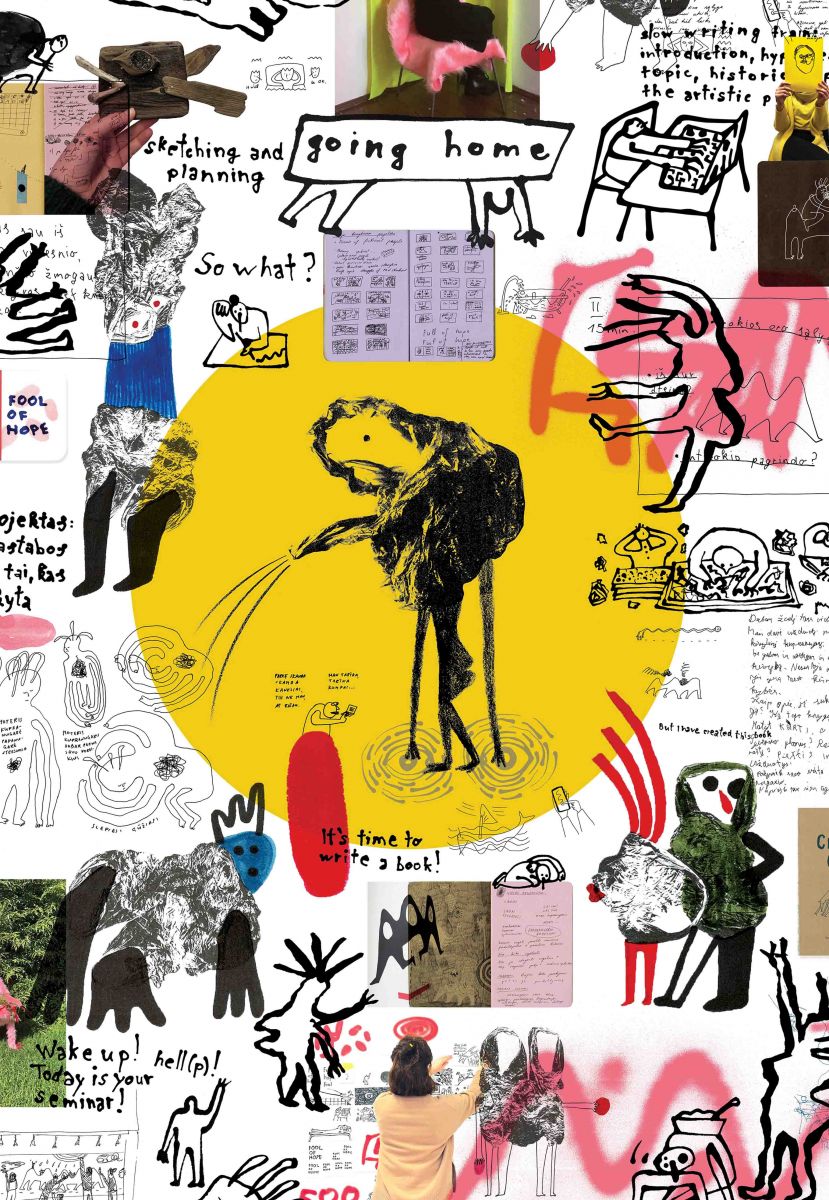
Rasa Jančiauskaitė, 2025 Primal Expression, Scribbling and Doodling, Visual Procrastination, and Creative Eros (the warmth within the creative act) are the main points of departure for this research in the field of visual communication design. Together, these concepts define the artistic project’s expression, methods, and search for inspiration. The dissertation “Primal Expression in the Field of Visual Communication Design” seeks to justify and articulate the artistic strategy of primal expression that has clear roots in art history and is directly linked to long-standing practices of spontaneity and intuitive creation. Such practices—like filling notebooks with text and images or engaging in spontaneous creative sessions—remain relevant today. Revisiting the notion of primal expression allows for the illumination of the behind-the-scenes stages of creativity, offering ways to make these processes visible to audiences and to create conditions for the expansion of scribbling and doodling stages—from the book format to exhibition spaces—and their return to the book, transformed by the experience of new contexts. In summary, the artistic strategy of primal expression is not only spontaneous but also reflective, communicative, experimental, and alive. It expands the boundaries of visual communication design while maintaining a connection both with the audience and with the creator. The structure of doctoral studies encourages action in the public sphere, while primal expression within design presupposes a sense of community—one that values not only the result but also the creative process itself, open to imperfection, incompleteness, and vitality. Art Project
|
Aistė Ambrazevičiūtė13th December 2024 "Lichen Grammar" Creative part supervisors: Prof. Gediminas Urbonas (2020-2023), Assoc. Prof. Dr. Rūta Spelskytė- Liberienė (2023-2024)
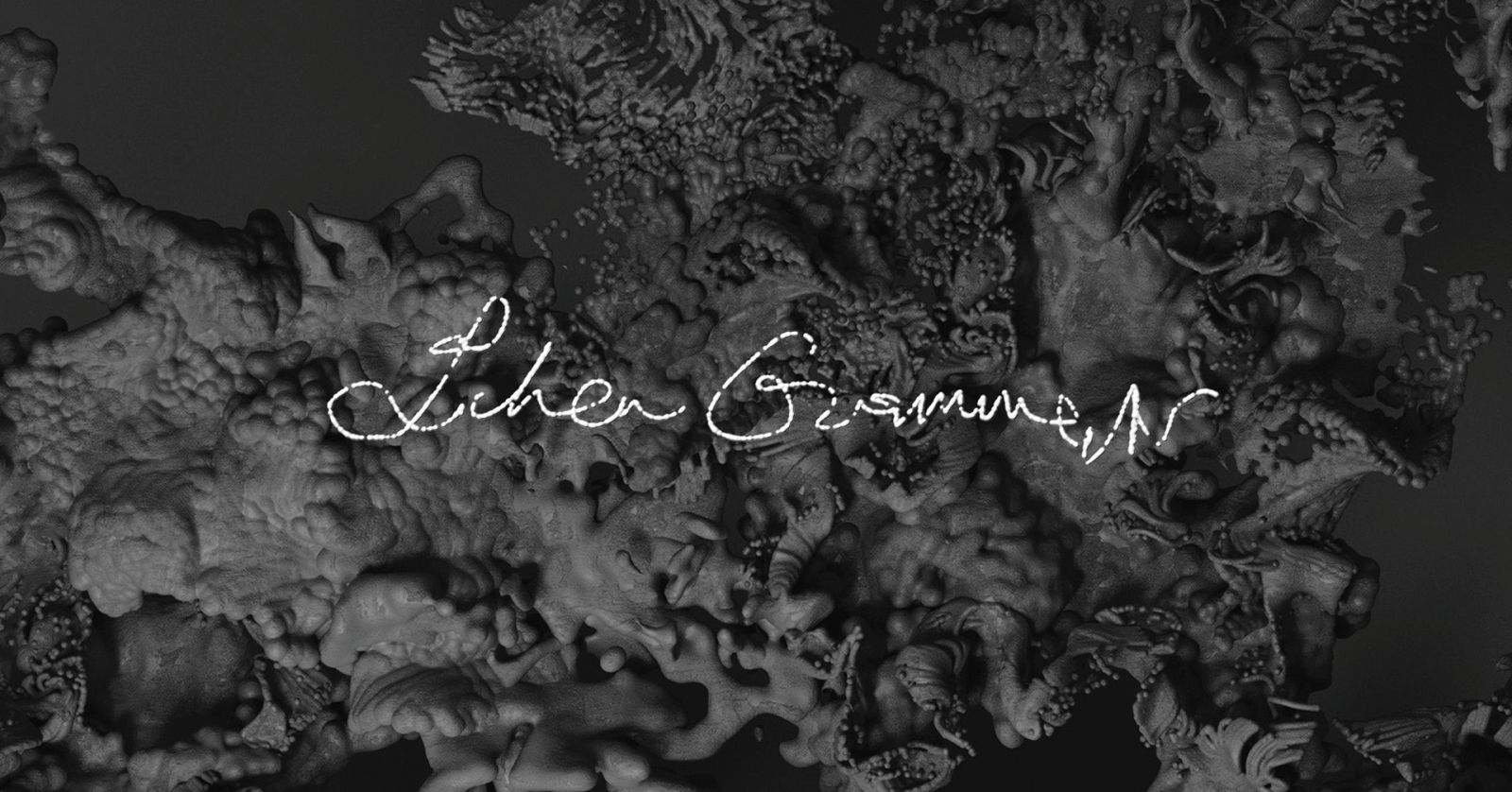
Lichen Grammar is a visual research, where lichen tell stories – visual and verbal, fictional and real. It is inviting to observe the microscopic yet enormous world of lichen through metaphors, built upon biological references, digital curiosities and imagination that turn to lichen worldview theories. Lichen teach us to trust our metaphors, our descriptive systems, and feelings as a form of knowing. Guided by visual associations, the artistic becomes the new scientific. Carrying out artistic research from the inside of lichen, being within, sensing, and installing methods of deep observation, makes one unable to unsee the new visual language and knowledge. Lichen teach how to reconnect with the environment, offering new design tools and a novel philosophy. By observing lichen, new patterns, new rules, and a new grammar emerge. Locally grown (or simulated), site-specific, contextural, digitally crafted, unpredictable symbiotic combinations manifesting in a variety of scales and formats throughout Aistė’s art practice, they offer new stories through image, form, and education. Art Project
|
Marija Puipaitė18th October 2024 "The Surface and the Inwards of an Object: Towards Sensual Design" Creative part supervisor: Assoc. Prof. Licentiate in Arts Mantas Lesauskas
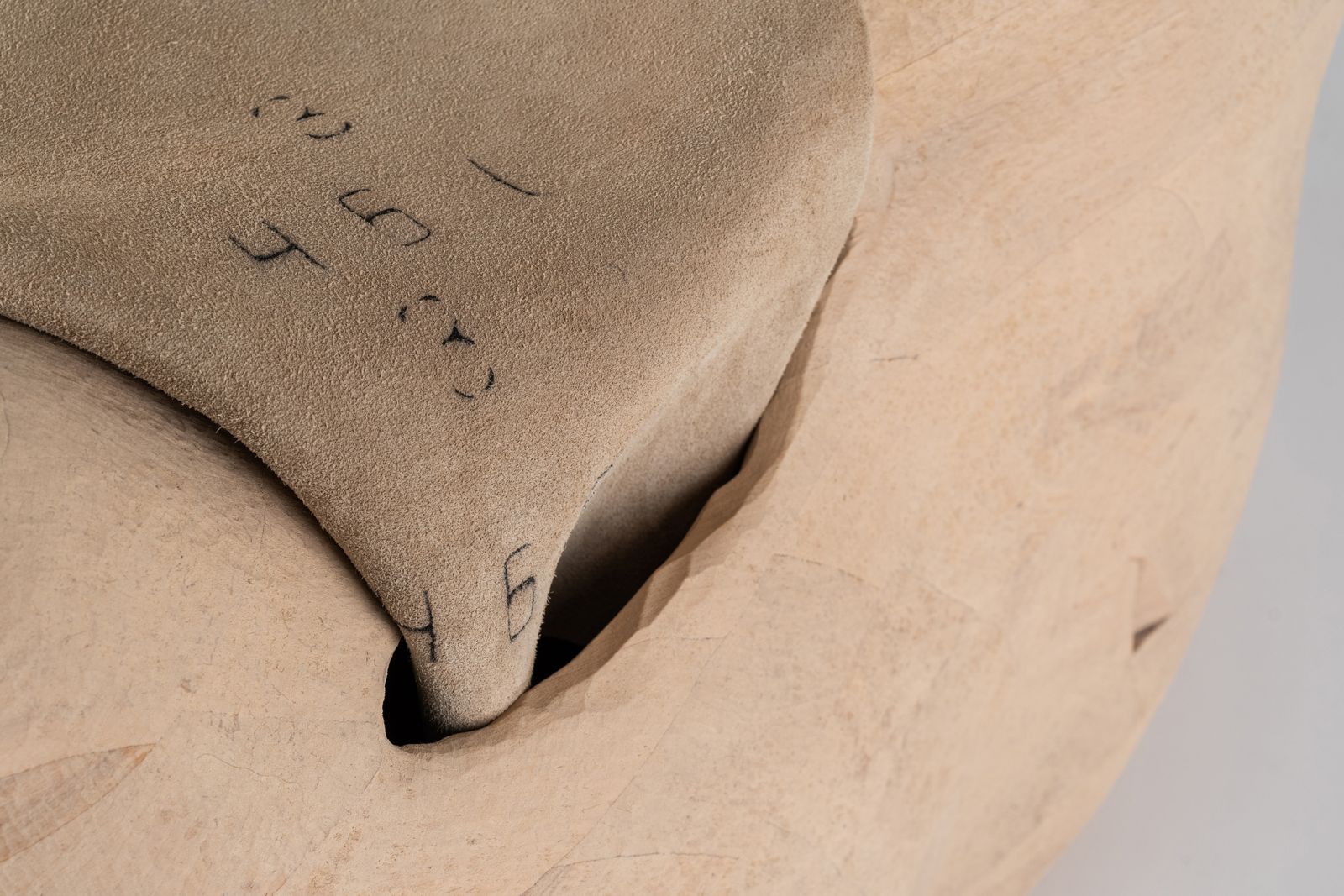
Marija Puipaitė, Atsidavę paviršiai / Devoted Surfaces, 2023, photo by Jonas Balsevičius This project explores the sensual affectability of an object and intimate, active relationship with it, arguing that a design object holds more meanings than just function, aesthetics, and concept, and that its full comprehension requires an irrational perception of the object. The idea of sensuality in this study goes beyond the boundaries of physical sensation. Sensual experience is intertwined with imagination, memory, and cultural context. It is suggested that the surface appeals to the senses, while the interior extends the limits of sensation into the realms of knowledge, imagination, and belief. This seeks to understand where the essence of an object resides, giving the form its content and creating an invisible yet perceivable value, capable of evoking emotion. The relationship between object and subject is reversed, exploring strategies to create an active, desiring object—one that invites care and elicits a response. The object's ability to evoke emotion is described as its aura, which defines its authenticity and impact. The search for this aura is likened to the early anatomists' passion for discovering not only how the body functions but also where the human soul lies. This highlights the importance of structure, layers, and interior in the perception of an object—whether visible or implied. The parallel between the anatomy of the body and furniture, the desire to reveal and see more than just the surface, along with the analysis of historical artefacts, shapes the strategy of the rupture or see-through gap as a condition for an intimate and active relationship with the object. In a new design object, this rupture manifests as incompleteness or a flaw, with its programmed insufficiency stimulating desire, much like the 'patina of time'—wear and tear (the reverse analogy of incompleteness) in historical objects is valued and often associated with the object's aura. Alongside the strategy for creating a desiring object, the research reveals how the practitioner-researcher adds value to historical studies by uncovering aspects that can only be reconstructed through practical experience. Artistic research and the practitioner's skills fill in the gaps of bodily experience and embodied knowledge. When factual information is lacking, the practitioner extends the boundaries of the object's perception and uncovers meanings embedded in its materiality. Art Project
|
Karolina Jašinskaitė14th June 2024 "Spatial Design Experiments and Method: Flaws Between Conception and Perception" Creative part supervisor: Assoc. Prof. Rokas Kilčiauskas
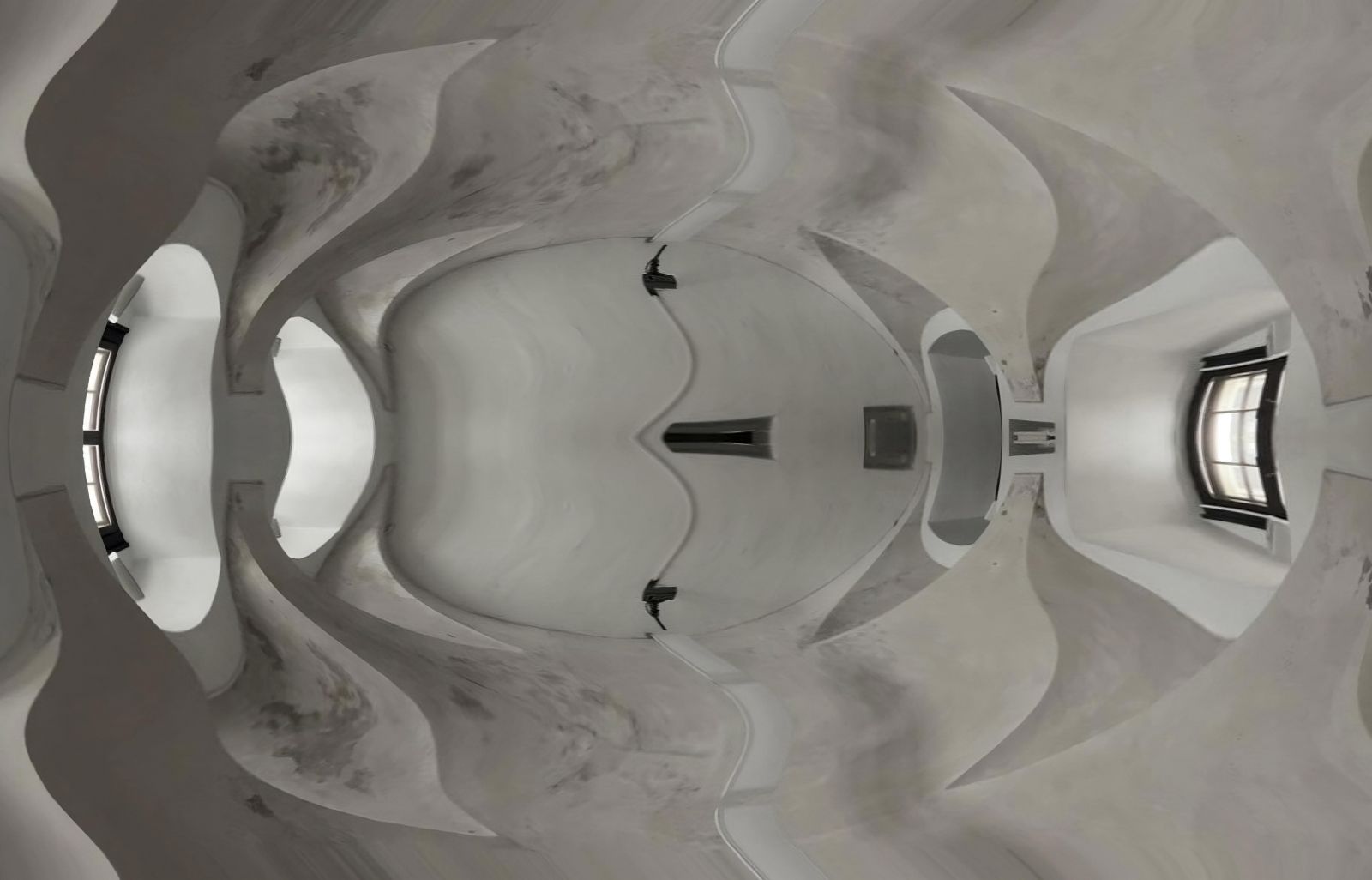
Credits: Spatial image generated by VDA IDK students using the method, 2022 The object of this research is the process of architectural spatial design, in which the architect of a space creates a message - a concept - and communicates it through architectural expression to the experiencer of the space to be perceptually received. The study presents the scenario that the message conveyed and the message perceived are not identical in all circumstances. The study aims to investigate the reasons for the flaws between concept and perception in spatial design and to develop a method to create a connection between these two parts of the process. To achieve the aim of the art project, the notions of concept and perception, the stages of the spatial design process and their interrelationships, as well as the methods of spatial design are examined. The experimental part of the art project attempts to understand the perceptual relationship between space and human beings. On the one hand, it seeks a pattern in which the geometric code of space coincides with human perceptual structures, thus achieving a coherent relationship between space and man. On the other hand, the study highlights that the flaw between spatial data and its perception not only puts cognitive tension on the human being but also develops and changes the perceptual structures of the human environment, creating a distinctive perceptual relationship. Based on theoretical and experimental findings, the research constructs a spatial design approach that creates integrity between the conceptual and perceptual stages and highlights the invisible correlations between space and humans. Throughout the art project, the method is developed and tested together with students of the VDA Interior Design Department. As a result of the spatial method, space is speculative in the definition of this research. The created space is not referred to only its physical form, but its projection, thus opening the way to alternative forms of spatial representation encouraging a rethinking of the relationship between man and space and the practice of spatial design itself. Art Project
|
Ieva Baltrėnaitė-Markevičė18th April 2024 "The Secrets of the (Un)Processed Collection: Reflection, Interpretation and Contexts of Lithuanian Women‘s Everyday Clothing in 1940‘s–1970‘s" Creative part supervisor: Prof. Eglė Ganda Bogdanienė
Credits: Veronika Žukauskaites-Balandienes blouse from the early 1960s. Photo by Saulė Barley, 2022 Ieva Baltrėnaitė-Markevičė's five year artistic project focuses on Lithuanian women's clothing and their stories from the period between 1940‘s to 1970‘s. The self-made clothing garments testify to the fateful events of the 20th century that took place in their background: the World War and the Partisan War, which suddenly and irreversibly changed the fabric of the society. These tragedies were accompanied by massive population shifts caused by the Holocaust, deportations to Stalin's Gulag, the flee to the West at the end of the war, the repatriation of Germans and Polish, the rural-urban migration, and the flow of emigrants from the USSR. The histories of Lithuanian women's clothing from that period are particularly unique, and the clothing garments themselves in their materiality, the circumstances of their origin and their later life, tell the story of the people who wore them and the history of their domestic life at that time. The Secrets of the (Un)Processed Collection speak of a time when, despite hardship and deprivation as well as the scarcity of objects and materials, people still adorned themselves with what was available to them at the time – imagination and creativity. This is reflected and visible in a wedding dress made from bright blue fabric brought back from the exile in Siberia, a graduation dress made from the lining of an American man's suit, or a dress worn for all the occasions for almost forty years, which has not worn out to these days. The collection consists of twenty four women's dresses, three suits, one blouse, one skirt, one coat, three shoes, one pair of winter boots, four fashion magazines, one children's christening set, one children's dress, one scarf, one knitted scarf, one notebook with hand-drawn patterns, and three knitted garments of uncertain function. The project is accompanied by the research on women of a Lithuanian origin living in France between 1940‘s–1970‘s and their clothing, a case study of Žemaitė and creative projects. The whole artistic project is structured by the Detective Wall, which visually groups the research process and results. The author's lively narration helps to unravel the meanings of the chronological sequences presented on the walls. Art Project
|

Sandra Mockutė-Cicėnė15th December 2023 "Lithuanian Fashion Brand Identity: The Research of Recognizable and Newly Reinterpreted Codes" Creative part supervisor Prof. Dr. Jolanta Vazalinskienė
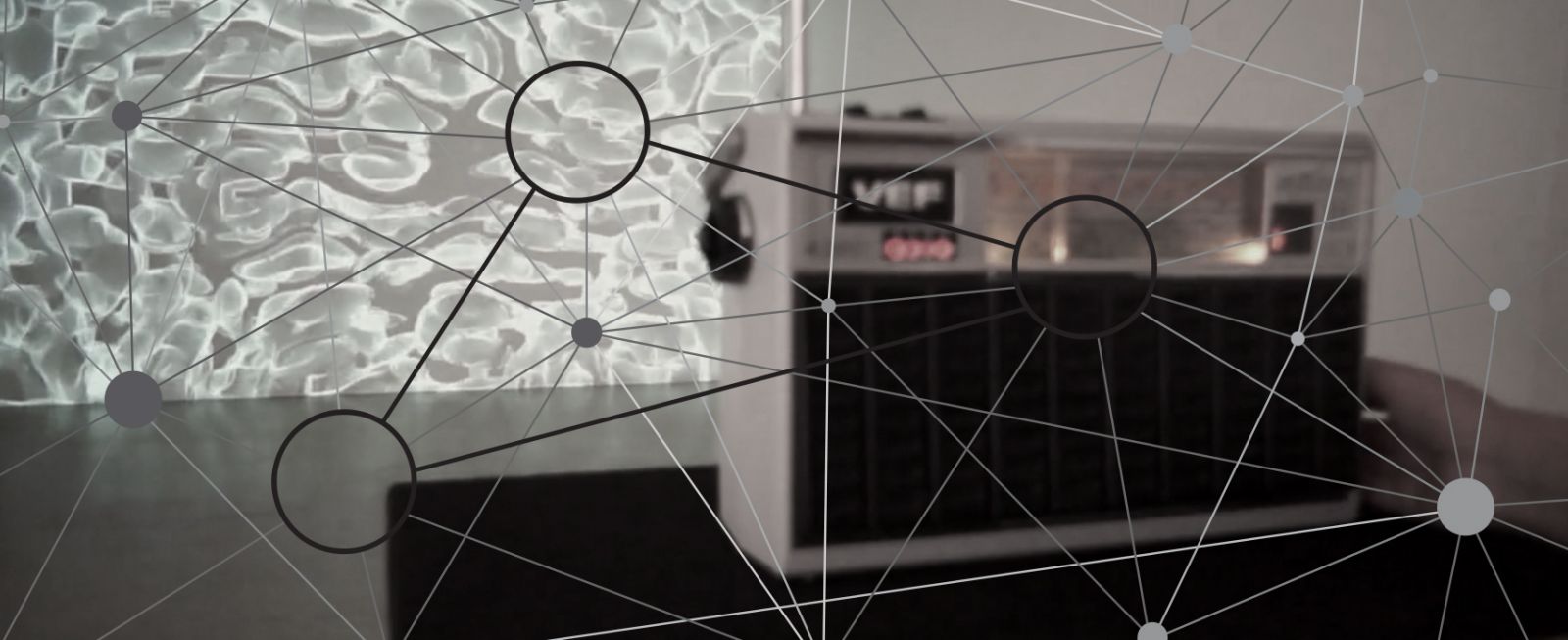
This work explores design that integrates the value code of Lithuanian identity in contemporary fashion. It shows analysis how the regional identity of fashion brands becomes a spreading brand trend in contemporary commercial fashion, and the extent to which it is relevant in the case of Lithuanian design. The research reveals how, under changes in the fashion expression form and lifestyle, the highlighting of regional identity in the commercial fashion field turns into both added value, a key of differentiation, and a way to stand out in the international fashion space. An artistic research map has been developed to both visually represent outcomes and serve as an illustration of the continuous process of artistic research that translates into the theoretical basis and schemes that later are integrated into the artistic practice.The research on the Lithuanian identity expression that structures the possibilities of expressing the identity code, as well as the creative practices of the dissertation author become a means for creating added value. In this case, the meaning and communication content of the fashion product become more important for the fashion brand. The design projects and their feedback demonstrate the fact that the regional code direction is credible, as well as its competitive advantage, which is particularly important in the global context, including the virtual fashion one. The dissertation content demonstrates how, by integrating the value-based code of the Lithuanian identity, Lithuanian fashion brands can develop a strategically useful model of the design direction. It undoubtedly improves the strategic development prospects for Lithuanian fashion brands. In the long run, the recognisable Lithuanian identity codes that are laden with new meaning can incentivise value-based attitudes for unique solutions of the Lithuanian fashion design, as well as to shape trends. Art Project
|
Liucija Kvašytė-Starinskienė29th September 2023 "The Significance of Attitude in Fashion Design: from Material to Moral Sustainability" Creative part supervisor Assoc. Prof. Severija Inčirauskaitė-Kriaunevičienė
This thesis examines the problems of perception of the concept of sustainability in fashion design and consumption. Analysed are material and moral qualities of sustainability emerging in different creators’ approaches and practices. The research conducted invites to question the concept of sustainability and find ways to build communities capable of identifying issues and solving them with a vision for a better future based on a holistic mind-set. The research has led to conclusions that discrepant perceptions among creators who perceive sustainability as a manipulative market strategy prevent defining sustainability. Also, that fashion brands, who seek to build a relationship with the user and to foster awareness, fail to communicate their goals of sustainability, their problems and approaches. The bottom-line is hope for the future of fashion based on the principles of circular economy, inclusive of user participation in creative and decision-making processes. Meanwhile, the creative objects and creative research of this work articulate questions in connection to designer’s creative principles advanced by the concept of sustainability, the legitimacy of the concept and the ways to apply it. The variety of such, as well as the shifting approaches and different perceptions, redirect the effort from the search for a single answer to the expansion of the features of sustainability and the principles of its operation. To test the operation of a designer’s attitude on a daily basis, I have applied the scheme described by design theorist Dr Jeroen N. M. van den Eijnde in his book Exploring the Space for Design Research Between I-We-Do-Think. The book explores the intrinsic link of scientific thought and the amateur production process, substantiating the value of design research that spotlights the designer-society interaction, to people and society. That way I, as a designer, have tested how my creative methods, namely, giving significance to others through my art or to myself through others, also thinking while creating and creating in thinking – correlate with the attitudes by other creatives operating in the field of fashion and what futures we can offer to the generations to come. Art Project
|

Mindaugas Reklaitis11th November 2022 "Performative Architecture as Critical Spatial Practice" Creative part supervisor prof. Henrik B. Andersen
The work reveals the possibility to position architecture as a spatial practice, shifting from object and representation towards interactions and spatial relations. Therefore the theme of performativity is introduced and developed in the field of architectural theory and practice. The work explores the principles of performativity and the possibility to be applied in spatial practice, incorporating the themes of relation, variability, constant measurement and morphogenesis. The developed notion of performativity reveals the concepts of intra-activity, new materialism and diagram, and provides tools to rethink the boundaries of architecture. The relationship between a human being and architecture, which is the starting point of the research, is extended to a broader spectrum of agents involved in the spatial phenomenon, revealing the multifaceted complexity and anti-hierarchical nature of architecture. The project manipulates architectural and non-architectural, static and dynamic, real and virtual, human and non-human means of expression to reveal the multi-layered nature of spatial practice. Research process is based on the concept of relays between theory and practice. Instead of practice being seen as an application of theory, it relies on fragmented and partial construct of the development of relations between theory and practice, where practice is a set of relays from one theoretical point to another, and theory is a relay from one practice to another. Therefore, one of the rules defined in the art project is to implement ideas and concepts in real conditions at a scale of 1:1. The architectural ideas and insights are implemented in real working experimental installations or models that expand the practical field of architectural expression. In this way, the socio-cultural concept of architecture is enriched by the phenomenological knowledge of architecture. Art Project
|
Sigitas Gužauskas27th September 2022 "Explanatory Strategies in Information Design" Creative part supervisor prof. Aušra Lisauskienė
The context of the artistic research project – one of the most relevant genres of visual communication design – is informational graphics which are identified in the study as images performing the explanatory or revealing function. The aim of the artistic research project was the development of the interpretational potential of the explanatory image by analysing the representational mechanism of explanatory images and conducting creative experiments. To achieve the aim of the artistic project, it was important to understand how the explanatory image works, what the structure of such an image is and how it explains. The creation of communication design prototypes was based on the idea that the data describing a phenomenon may contain not only the phenomenon’s features relevant to scientists or experts but also fascinating narratives and involving stories which are also of interest to the mass audience. Therefore, in the pilot platform, rendering of data, information and knowledge is realized as the creation of informational experience, i.e., formation of multi-layered grasp when rational perception is coordinated with sensory experiences, aesthetic and emotional experiences, or playful situations. Design prototypes created in the course of the project convey the facts contained in digital data using visual stories which return the “lost” features of reality to the phenomena reduced to numerical values. Art Project
|


Elzė Sakalinskaitė-Beinaravičienė19th March 2021 "Health-Promoting Accessories: The Interaction Between Science and Art" Creative part supervisor prof. Eglė Ganda Bogdanienė
This doctoral research is based on the idea that disability is not a personal weakness (temporal or permanent) – it is more a physical distinction and uniqueness, therefore, health-promoting accessories, conceptual jewelry, could be seen as an original benefit or expression of a personal style. The aim of this research is to create health-promoting accessories that can visualize personal disability as a unique individual feature. It can serve the disabled person to represent his personality, experience positive aesthetical emotions and positive responses fom the the social environment, thus consequently improve health-promoting possibilities of a patient. Theoretical research aims to analyze the already existing transdisciplinary health-promoting accessories in Lithuania and foreign countries, compare them, discuss design solutions, uncover conceptual and phylosophical ideas that artists encoded in their artworks, as well as evaluate trends and possibilities in this field. Art Project |

Justė Pečiulytė (ArcInTex ETN)27th November 2020 "Atmospheric Spatial Modelling. Ways of Staging Space with Textile Setups" Creative part supervisor prof. Eglė Ganda Bogdanienė
The disciplinary boundaries of physical modelling are stretched considerably when it is used in an art-based research context. This practice-based research looks at the ways in which the concept of “atmospheric” redefines and expands our understanding of spatial modelling practice. The research is underpinned by emerging theories that posit the performative, embodied, and cinematographic potentials of spatial modelling. Atmospherically rich dwelling environments do not arise from conceptualised, representational modelling frameworks, as these simply do not allow for atmospheric expressions. The design perspective adopted in this inquiry placed the focus on modelling practice and, consequently, related acts and gestures. The aim of this research was to explore the potential of spatial modelling as a fundamentally atmospheric activity, and staging as a spatial modelling act. The practical work investigated the expressive potential of textile materiality with regard to design acts and gestures; a conceptual framework called The Atmospheric Staging Studio was used for the methodological exploration of modalities and modes of staging with textile setups. The Atmospheric Staging Studio sensitises designers to modelling acts and gestures. The design conditions it suggests highlight the importance of awareness, humbleness, and adaptability within the interior modelling process. In design education programmes, the further development of this framework could lead to a design model based on embodied spatial knowledge. website Art Project
|
Kristė Kibildytė-Klimienė12th June 2020 "The Problem of Personalization in Contemporary Design" Creative part supervisor prof. Aušra Lisauskienė
The problem of personalization in design is a phenomenon currently taking form. As most processes in times of liquid modernity, it is ambivalent, self-subsistent and self-intensifying, compulsive and obsessive, unable to contain its form for longer periods, it, indeed, even does not have a solid form. Design discourse also sees a diversity of its manifestations. Therefore, the most adequate analytical take of the phenomenon of personalization is through an open system and lose links between different factors at work (the mapping of shape-taking social and cultural factors). Such a system does not operate like a theory that underpins examples of personalization, while examples are there not to support a theory. It is a process of tracing parallels – e.g., potential linkages. The aim of the research is a critical reflection of personalization in contemporary design and of its impact on design discourse and practice, the changing of the standpoint to this tendency and at the same time, the broadening of the awareness of design in its connection to social and cultural phenomena. The general aim of the project The Problem of Personalization in Contemporary Design is not to pinpoint a problem and to pursue solutions, yet to unpack the complexity of the problem in theoretical research part, and with the resulting understanding of the ambivalence of the phenomenon, to undertake the shaping of a new kind of approach through creative practice, e.g., to come up in the creative practice part, with a new expression to the problematics of personalization. Creative experiments and design practice led to the creation of an original concept of personalization. The project of surface design Aporetic Surface is an attempt to express a critical standpoint to the phenomenon of personalization by using a hands-on-approach. This decision was made, on the one hand, due to the aporetic nature of personalization and the impossibility to arrive at a consistent and closing conclusion of the research. On the other hand, material thinking allowed to concentrate on critical approach and to interpret the tendency of personalization by creating a new expression. The choice of the hands-on principle was motivated by the interest to operate in a particular area of design that expands the field of visual communication. In this case, surface design has been relocated from the category of decorative and product design to a conceptually perceived field of visual communication. Art Project
|
Rokas Dovydėnas7th February 2020 "3 Ceramic Stories: In Search of Personal Approach" Creative part supervisor assoc. prof. Juozas Brundza
This study, 3 Ceramic Stories: in Search for Personal Approach, shows the possibilities of combining different content elements – writing, ceramic installations, materials, stories, and analysis of cultural history – into practice-based artistic research. If a space was a question, these works were an answer. This is a conversation between an exhibition or a museum hall and the artwork exhibited therein. This is my way as a researcher to converse with the viewer through works and their environment. I speak about failure and copy, transferring research from substance (clay) to its (non-)potential of expression in contemporary culture. It is widely believed that discoveries and inventions change the world. History preserves the names of heroes, while prospectors who have left for the most important journey of their lives and got stuck halfway do not receive extensive studies. In the history of ceramics and in the craft of pottery, I discover cases in which failure saves the craft and items made by accident become part of the story. This experience has led me to the question - how much artist-designer is (not) influenced by the knowledge of historical art? This artistic project presents searches and possible answers. Art Project
|


Marius Dirgėla20th December 2019 "The Problem of Authorship in Contemporary Design" Creative part supervisor prof. dr. Vytautas Kibildis
The thesis assumes that the attitude of the creator of a design towards authorship and originality can influence professional success. In order to confirm or deny it, first, the development of the perception of originality and authorship are reviewed from a historical, philosophical, legal, psychological, and pedagogical perspective, and the key concepts related to authorship in the field of design are discussed. On the basis of accumulated knowledge, quantitative research, which includes a questionnaire survey and an analysis of results and reveals the attitude of Lithuanian design students towards ethical aspects of the profession, as well as qualitative research, namely, interviews of 8 famous Lithuanian designers, are conducted. By comparing the results of the theoretical, quantitative, and qualitative research, general conclusions are formulated. In the field of design, due to its specificity, absolute authorship of decisions is impossible and even undesirable, and the persecution of cases of copyright infringement, as they are understood in the current copyright law, as well as the restriction of access to creative output has a negative impact on the quality of creative output of other members of society, from financial, security, and moral point of view. At the same time, design schools, with rare exceptions, focus on the independent search for new problems and unique solutions for those problems, which is often done collectively. This threatens the loss of continuity and dematerialisation of the discipline. In that regard, the creative part of the project is executed as a copying experiment, which seeks to test whether such a traditional method of development could be useful in the modern study process. The experiment shows that such activities would help develop the ability to move beyond one’s ego, enhance the skills of a work activity having a well-known and clearly described desired outcome, accumulate tacit knowledge, and become familiar with the techniques for deeper than visual cognition of an object and the practice of generating creative ideas that result from it. Art Project
|
Renata Maldutienė26th April 2019 „Colour Forecasting in Lithuanian Fashion Industry“ Creative part supervisor prof. dr. Vytautas Kibildis
The main object in this research is the global colour forecasting process with its methods and their significance to Lithuanian fashion. Global fashion trends and colour forecasts do not adapt well to the Lithuanian fashion market. Local fashion industry lacks adequate methodical tools, which could help test how to better understand the consumers’ taste and demand for colours. More accurate information about the methods for adopting global colour forecasts and forecasting local colours could stimulate a chain of desirable phenomena in the field of Lithuanian fashion design. Thus, different methods and models of colour forecasting in the global Western fashion system are analyzed in the theoretical part of the art project. The process of colour forecasting in Lithuanian fashion industry is investigated through in-depth interview. According to the obtained data, the local model for the adoption of global colour forecasting in Lithuania (LAM) is being developed. The comparative analysis of two models (GCFM and LAM) defines the contradictions and factors existing between them. Considering the peculiarities of the colour forecasting process in the local fashion industry, a group of methodological tools is created and proposed to compensate for the shortcomings of the LAM. A new local model for the adoption of colour forecasting (NLAM) is being constructed in the research that could be applied in the Lithuanian fashion industry. The artistic part of the art project did not aim to obtain results of fashion colour forecasting directly. The aim of the artistic practice was to delve into those fields of knowledge that were unattainable through the application of analytical thinking methods, and in this way, through a creative experience, to integrate the emerging results into the whole of the art project. In the fashion industry, colour prediction is a combination of analytical and intuitive methods. Art Project
|


Viktorija Diak14th December 2018 "(UN)SUSTAINABLE CONTEMPORARY FASHION INDUSTRY AND THE FASHION OF THE FUTURE" Creative part supervisor prof. dr. Jolanta Vazalinskienė
Photographer Andrii Diak. Prototype of the material produced with a 3D printer. The rapid pace of the development over the past 100 years caused a massive depletion of many resources and total pollution around the planet. Each industry contributes its individual share. The current study ((Un)Sustainable contemporary fashion industry and Future fashion) is only considering fashion industry – so familiar to everybody with its bright, stylish and shiny windows of a modern boutique, and yet so secretive and unfamiliar with every step along its way to get there. The topic is extensive, that to fit all its aspects is not possible. The main course of the current research is to shine a glimpse of light to the inside fashion industry production cycle and its adverse impact on the environment. The study analyzes topics such as ideology, consequences, overproduction, pollution, overconsumption psychology and an inevitable exponentially growing waste problem caused by fast fashion. In the end of research, the author’s vision of the future fashion industry based on principles of sustainable design is represented. By use of modern technologies and biomaterials an innovative circular system for the manufacture and use of wearing apparel is created: from the choice of product, creation to delivery, wear and utilization. Art Project
|

Marius Bartkus21st December 2017 "A VISUAL METAPHOR: GENERATION AND APPLICATION IN PRACTICE" Creative part supervisor prof. Audrius Klimas
The thesis examines how creation of visual metaphors can be automated for graphic design purposes. The question of how the process of forming the meaning of images or content of a message could become automated and a part of the creator’s work could be passed on to a computer is raised. The study provides an overview and analysis of the problems encountered in an attempt to entrust the visual metaphor generation process to a computerised system. The difference between a description of a resource carried out by a computer or a human being, separation of visual objects from the environment, a variety of aspect angles, values of combining objects among each other, video content overlooked by computerised systems - this is only part of the problems faced when trying to automate the creation of metaphors. A visual metaphor generator, which allows for quick creation of visual metaphors, communication messages, manipulation of values, by giving controls not only to the creator, but also to the social environment - evaluators of a piece of work, is proposed as a solution to the problem. A speculative model of the visual metaphor generator is presented and proposals for development in employing artificial intelligence are made. Art Project
|
Agnė Kuzmickaitė-Prūsaitienė27th October 2017 "THE EVERYDAY AS A CREATIVE INSPIRATION : DESIGNER’S SELF- REFLECTION" Creative part supervisor assoc. prof. Jolanta Talaikytė
Various elements of the everyday life, objects and repeating everyday errands — shopping, laundry, bin bag, images of messy clothes or a child’s primitive drawing — can often become an inspiration for a garment construction or a concept of a fashion collection in the contemporary fashion design. Art project The Everyday as a Creative Inspiration: Designer's Self-Reflection analyses various and different everyday roles of the artist, and their scenography with emerging objects, which are used as an inspiration for fashion design. The project investigates methods applied for the integration of the everyday artefacts into garment construction through social and cultural contextualisation, and the use of personal experience. The method of integrating everyday life, used by both dominant and minor designers, in this analysis is defined as one of the most important methods in the contemporary fashion design field. In the garment construction, this practice often emerges through the use of methods that are characteristic to architecture or contemporary art. The practice of this art project demonstrates fashion collections inspired by the everyday experiences and created during the period of the doctoral studies. Art Project
|
Rūta Mickienė24th February 2017 "THE OPEN WORK IN VISUAL DESIGN: A MODEL FOR PSYCHOEMOTIONAL PERSONAL DEVELOPMENT" Creative part supervisor prof. Aušra Lisauskienė
This research aims at exploring the potential of visual design objects, based on the open work model, for cultivating human psychoemotional well-being in the field of arts. What is behind the meaning of spoken words? Can this meaning become visible, readable and adaptable for human wellbeing? Can a visible sound unfold the meaning more broadly than just the one that could be heard? Can the work be perceived more comprehensively when hearing is supplemented with vision? When a work visualizes the voice of a viewer, who also becomes a co-author, does a viewer, who is listening to the work with her eyes, perceive it differently? And how different is this perception? Perhaps the open work, which involves a viewer into creative process, can provide an answer. Perhaps this answer might reveal the utilitarian function of the open work concept when implemented in visual design. These are the leading questions in both, practical and theoretical parts, of the artistic research in design. The theoretical part relies on Gilles Deleuze’s “thought-image” of rhizome. The rhizomic connections join together the potential of self-realization inherent in open work, as postulated by Eco, the need for self-actualization emphasized by Maslow, interpretation of artwork through senses and its promise to “reveal more” discussed by Maurice Merleau-Ponty, psychoevolutionary theory of emotions developed by Robert Plutchik, emotional intelligence examined by Daniel Goleman, experience of aesthesis contended by Eric Landowski, and somatic aesthetics analysed by Richard Shusterman and yet remains open to join new connections. The practical part composed from several projects that are like „rhizome‘s“ branches merged between demonstrates all main features of the open work‘s model and seeks to integrate the psychoemotial monitoring and developing into the open work's stucture. Art Project
|
Deima Kristina Katinaitė-Zajančauskė27th January 2017 "THE PERCEPTION OF COLOUR PHENOMENON IN BAUHAUS SCHOOL AESTHETICS AND ART PRACTICES" Creative part supervisor assoc. prof. Alvydas Šeibokas
Colour projects of artists – theoreticians (Kandinsky, Klee, Itten and Albers) discussed in this dissertation might be understood and interpreted as interdisciplinary artistic researches relevant to the present day pedagogical system of teaching art subjects. They are distinguished for an original linkage of theory and practice, ways of demonstrating the tacit knowledge and an open ended question model of research, when expressive possibilities of the researched phenomenon (colour) are demonstrated through continuous improvisation. Characteristics of Čiurlionis’ colour project, namely, the emergence of relation between artistic practice and intellectual knowledge in his chromatic system, also allow treating his creative activities as artistic research. Art Project |


 The main research subject of the present dissertation is concerned with the concept of colour phenomenon in the aesthetics of the Bauhaus school. In the centre of critical analysis is the uniqueness of the colour phenomenon and problems associated with perception thereof, which were of utmost significance to the artists chosen for analysis – Wassily Kandinsky, Paul Klee, Johannes Itten and their student, Josef Albers – one of the most remarkable lecturers at the Bauhaus and later at Black Mountain College in the USA. When choosing the philosophical approaches for their colour researches, these artists have emphasised the significance of idea and brought forward the creative power of thought. Demonstrating the interrelationship of diverse phenomena of the art world at conceptual level, they stressed the significance of perception and thought, regarding the applied aspects of the colour phenomenon to be of minor importance. Hence, the present dissertation focuses on the perception of colour phenomenon, deliberately leaving the aspects of its application outside the scope of this research. It strives to present colour interpretations of different creators as a synthetic – relatively unified – theory or rather as art philosophy, bearing the same message as non-classical aesthetics. Therefore, the present research draws an imaginary line connecting the perceptions of the colour phenomenon at Bauhaus (Klee, Kandinsky, Itten), Black Mountain college (Albers) and by the Lithuanian painter Mikalojus Konstantinas Čiurlionis.
Inga Valentinienė10th June 2016 "THE APPLICATION OF LOCAL FIBROUS MATERIALS TO THE DESIGN OF ECO-FURNITURE" Creative part supervisor prof. Jonas Venckūnas
The present art project of ecological design is created and applied to the furniture sector, which until recently was considered one of the most anti-ecological industries. By taking the said ecological problems of this sector into account, the creation of not only ecological interior objects but an ecological material itself was strived for. During the course of the present art project, an ecological, harmless, self-degradable material, which provokes innovative design forms, has been created from such renewable fibrous plants as flax/linseed (lot. Linum usitatissimum L.), stinging (fibrous) nettle (lot. Urtica dioica L.) and hemp (lot. Cannabis sativa), and patented. The said plants grow naturally in Lithuania. In the project, the following phenomena of the manufacturing and realization of ecological products, which have become the crucial starting points in the creation of furniture designs from natural fibres, are analysed: proper usage of structural materials and fittings for furniture production, increase of energy efficiency, optimization of transport services, promotion of local materials and local production, and assurance that the product will be utilized safely or reused. This is a new niche of ecological design, a missing link in the chain of growing and processing fibrous materials and the synergy of various industries, agriculture and even medicine. Art Project |
Ignas Lukauskas6th May 2016 "DECONSTRUCTION OF CRACKS IN THE STRUCTURE OF THE CITY" Creative part supervisor assoc. prof. Romualdas Kučinskas
The determination of the innovative impact of deconstructed urban destructive spaces on an individual is amongst key problems under consideration. Problematic relationship between an individual and destructive spaces also is amongst the most important issues. The key problem examined in the art project covers the destructive spaces of the city and the origin, change, and interaction of negative phenomena related thereto. Art Project |
 The research of the current art project encompasses the entire ecological production chain from the perception of an ecological plant’s physical and chemical composition to the solution of producing interior eco-objects. What is more, the possibilities of manufacturing structural materials from fibrous plants in Lithuania, the structural peculiarities of interior eco-objects, the possibilities to form and produce them locally, and the types of ecological interior objects in the global market are presented.
 The object of the study – public spaces under deconstruction in the city which in the project are referred to as destructive cracks and are related to negative destructive phenomena. Destruction in urban spaces as a destructive phenomenon is examined in a social context avoiding the formation of destructive shapes or spaces. Relationship between an individual and destructive spaces which in the current socium are a widespread phenomenon is studied by means of a deconstruction methodology. Major attention is paid to destructive public spaces in the city. The general objective of destruction and the form of expression thereof, the impact of negativeness on an individual, the problems of existential feeling and experience are examined. Public spaces under deconstruction as the key object of the study are the most important. The study covers the public, social, and cultural aspects related to destruction in the city.
Rūta Būtėnaitė
15th December 2015
"THE CARPET: BETWEEN ART AND DESIGN OBJECT"
Creative part supervisor prof. Dalia Adomonienė
Theoretical part supervisor prof. dr. Ieva Kuizinienė
 The research part of the art doctorate work titled THE HISTORICAL ROLES OF ARTISTIC CARPETS AND THEIR TRANSFORMATIONS IN CONTEMPORARY ART AND DESIGN analyzes the roles performed by an applied textile object – the carpet – and the means which enable a certain intellectual, psychological, emotional and sensual effect on the perceiver, and hence determine the exclusive role of traditional carpets in Islamic culture. The work identifies and defines the informational/narrative, ritual/sacral, and emotional/meditative roles of the carpet which enable the latter to function as an emotional zone. The research examines the historical artefacts which represent these roles, analyzes the ways in which they are interpreted and questioned in the works of contemporary artists and designers, and identifies the links with the themes, creative methods and technological solutions employed in the author’s personal practice. The creative project THE CARPET: BETWEEN ART AND DESIGN OBJECT incorporates the symbolic meanings of the Eastern carpets analyzed in the research work and employs the legend of the Baharestan carpet (6th century AD), which reflects how the carpet affected, through sight, the other senses as well, such as hearing, taste, smell, touch and, accordingly, the mood and emotions. This became an inspiration for designing carpets capable of stimulating feelings and emotions, and revealing the intangible value of a functional textile object. The Pleasure collection employs surface solutions inspired by tastes and smells. The Paradise Gardens carpet set brings together the ideas of the magical promised garden and the flying carpet as a mediator between two worlds. The research reflects the main aim of the artistic project: to see Heaven while looking under one’s feet.
Art Project
